The short version: Gas-powered bird scarers, 130 decibels, every 20 minutes from 5am. Guests leaving early. Bad reviews. North Norfolk District Council said it was a civil matter. The police had a three-week wait. I ran out of patience. Two arrests, a conditional discharge, and a four-year lesson in what the Environmental Protection Act 1990 does and doesn’t protect. Full story below.
The Day I Took the Law Into My Own Hands
I want to be upfront about something before you read this. I was convicted of criminal damage at Norwich Crown Court in September 2026. I received a 12-month conditional discharge. I am not writing this to relitigate the case or to point fingers at anyone, the press covered the facts, and I’ll link to their reporting at the end. I am writing this because the experience exposed a legal gap that affects every campsite, glamping site, and tourism business operating under canvas in England, and nobody is talking about it.
Gas gun fired as a weapon at my campsite
Gas gun fired as a weapon at my campsite, on camera. Filmed about two weeks before I removed the devices. Gas gun, boom, high nature, then the walk to the quiet of the campsite. Sixty to eighty metres. Thin canvas on the other side.
My guests at the North Norfolk woodland site sleep in yurts. Canvas. Five millimetres of canvas between them and whatever the world is doing outside.
In the summer of 2024, the world outside was doing approximately 130 decibels every 20 minutes, starting at 5am and running until 11.30pm.
One hundred and thirty decibels is equivalent to the sound of a gunshot at close range. For context, prolonged exposure above 85 decibels causes hearing damage, according to the Health and Safety Executive. My guests, couples, families, people with dogs, people with babies, were lying in their beds at 5am listening to what their reviews described as “explosions.” One guest said it felt like the device was right by their head. A baby was woken repeatedly. Dogs were trembling.
People left early. People left reviews. And the reviews, to their credit, were honest: the site was beautiful. The explosions were not.
I started keeping records. Dates, times, decibel readings. I filed a complaint with the local authority’s environmental health department, which was the correct thing to do.
Our yurt. Green canvas. Wooden doors. Deck in the pines. North Norfolk woodland site near Holt. This is the home my guests booked.Inside the same yurt. Lattice walls. Circular skylight. Wood stove. Thin canvas all the way round. That is what stood between my guests and the gas gun.
What the law says
The Environmental Protection Act 1990 is good law. It defines a statutory nuisance in section 79. Noise emitted from premises so as to be prejudicial to health or a nuisance is a statutory nuisance. The Act defines “prejudicial to health” as “injurious, or likely to cause injury, to health.” At 130 decibels, every 20 minutes, from 4am, that definition was met by any plain reading of the words. The Health and Safety Executive puts the hearing damage threshold at 85 decibels. We were 45 decibels above it.
The government’s own guidance on noise nuisances, published on GOV.UK, states that for noise to count as a statutory nuisance it must “unreasonably and substantially interfere with the use or enjoyment of a home or other premises” or “injure health or be likely to injure health.” Not a home only. A home or other premises. A glamping site with paying guests sleeping in canvas yurts is other premises.
Section 80 of the same Act says: “Where a local authority is satisfied that a statutory nuisance exists… the local authority shall serve a notice.” The word is shall. It is not “may consider.” It is not “may, subject to resources.” It is a mandatory duty. Once a council is satisfied a statutory nuisance exists, it has no discretion. It must act.
Section 82 goes further. “A magistrates’ court may act on a complaint made by any person on the ground that he is aggrieved by the existence of a statutory nuisance.” Any person. Not any resident. Not any ratepayer. Not any voter. Any person. My guests, lying in canvas at 4am with explosions going off sixty metres away, were persons aggrieved. The law gives them standing.
I want to be precise about something, because this case has been widely described as the law failing my guests. The law did not fail them. The law, read plainly, includes them. What failed them was how North Norfolk District Council chose to interpret and apply that law.
Even the prosecution at Norwich Crown Court acknowledged I had initially made what they called a “legitimate complaint” to the district council, a detail reported by the Eastern Daily Press and confirmed at sentencing. The council declined to act. What followed from there was, in the prosecution’s own words, a matter of patience.
The police
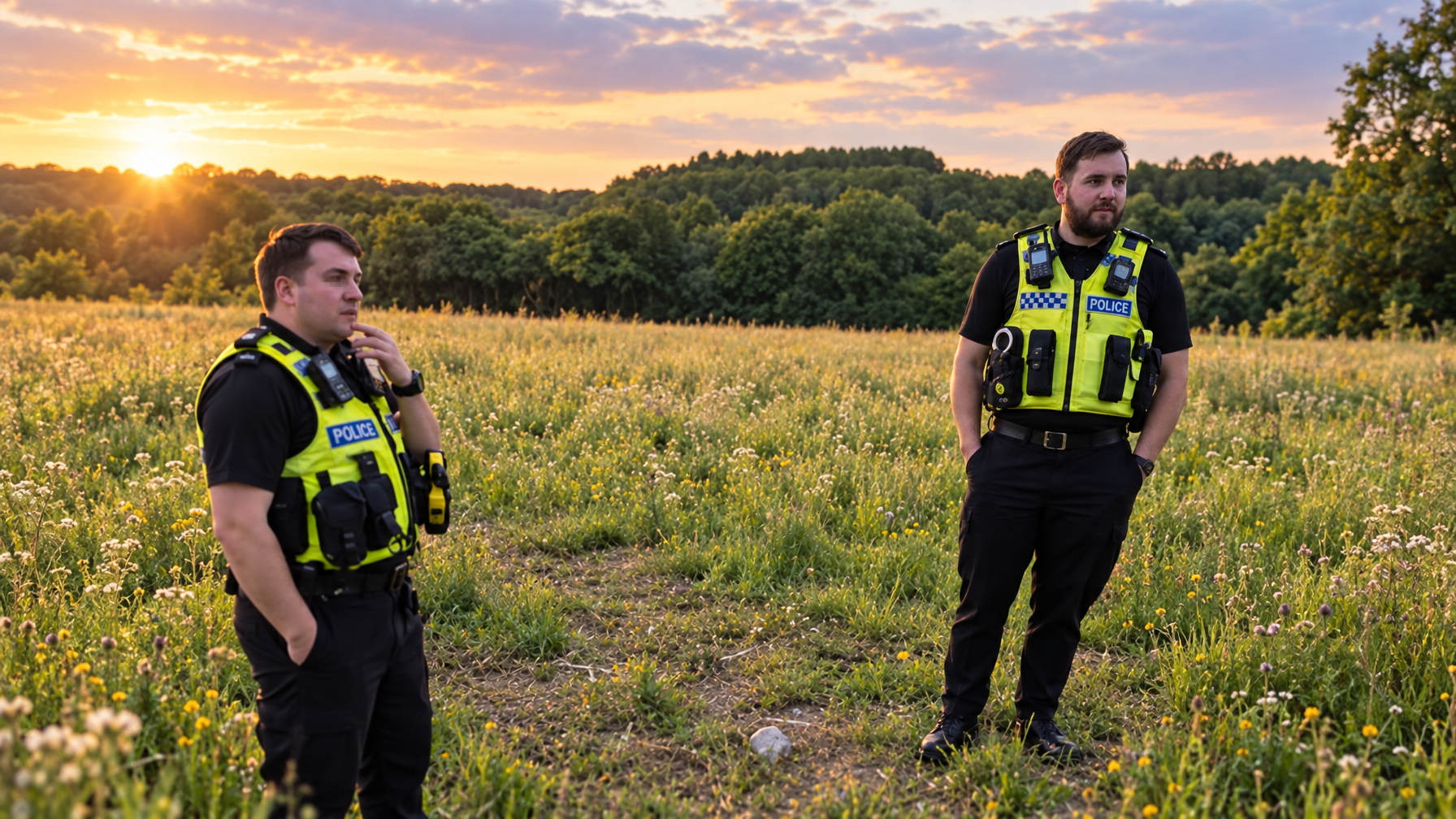
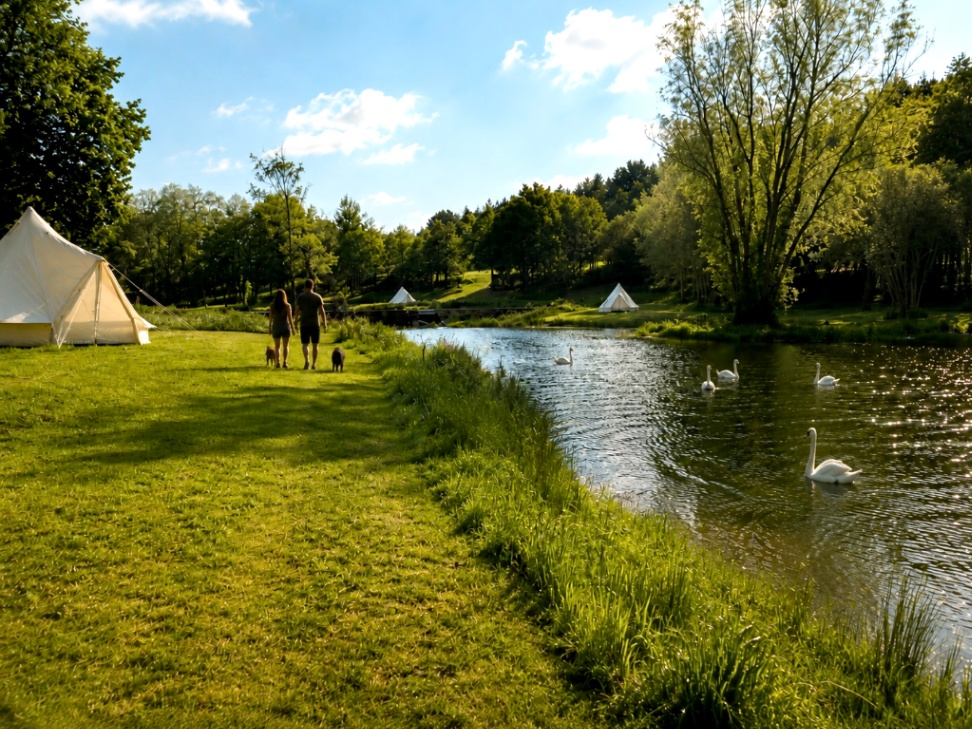
The swans were here before the scarers started. They left when the noise began. The sunset over the lake at Dam Hill, Edgefield.Within fifteen minutes of the other side making a phone call, three police vehicles arrived at my site. I had waited three weeks for a callback.
I filed a complaint with the police. They were professional and thorough, and they told me someone would be in touch to discuss the matter.
The call-back offer was three weeks away.
Three weeks. In peak summer season. With guests leaving bad reviews. With a baby being woken at 5am.
The police decided this was a matter for North Norfolk District Council. On that basis, they stood aside while a device capable of 130 decibels was discharged repeatedly, every 20 minutes, at members of the public sleeping in my care. North Norfolk District Council had already told me they couldn’t help. Both institutions pointed at the other. Nobody acted.
I want to be fair: police resources are finite and noise complaints are not high priority. But I want you to sit with that sequence for a moment. Two public bodies. One gap between them. And my guests in the middle of it.
Photographed 24 July 2024, 13 days before the incident. No crop. No standing cereal. Nothing to protect. Pointing directly at my site, approximately 60 metres away.
What I found when I got there
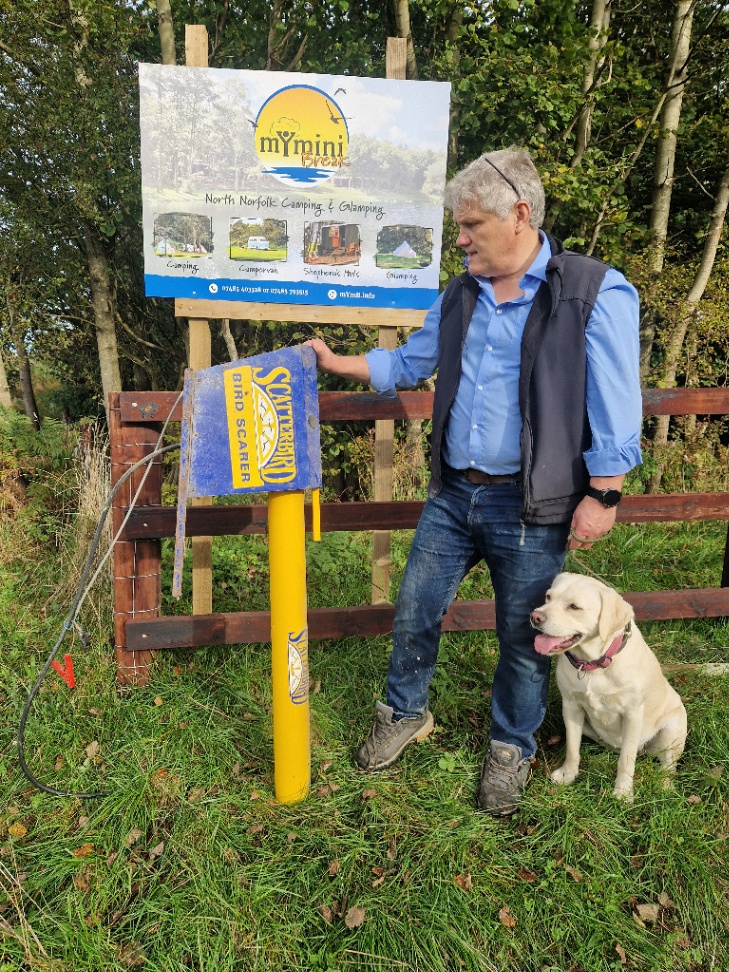
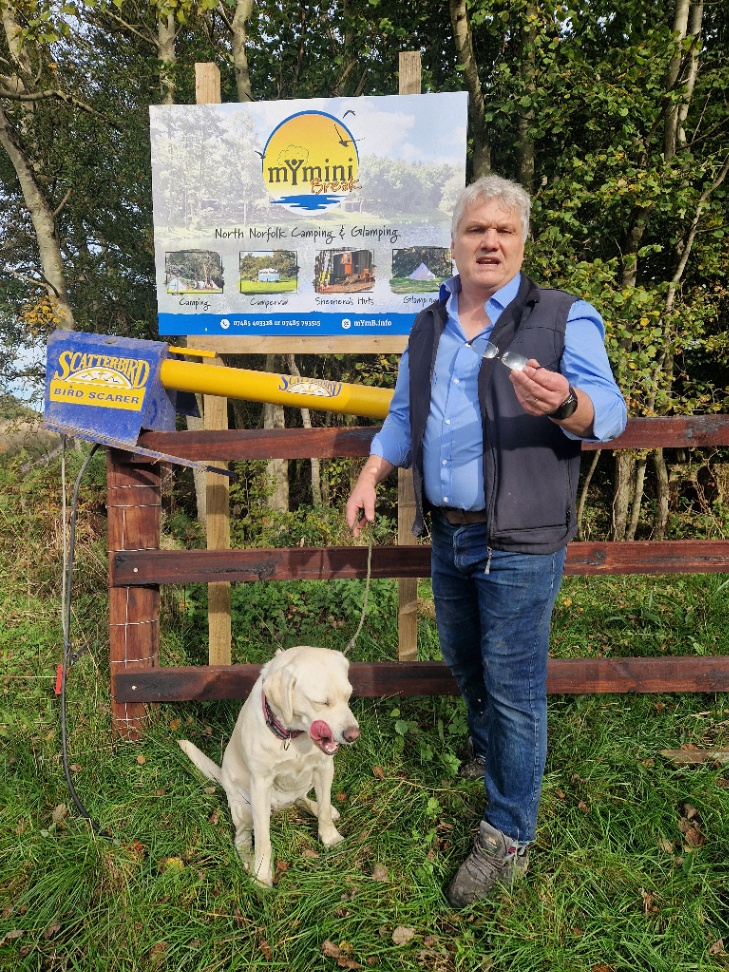
I went to the site of the bird scarers. I introduced myself, I had my phone on camera, and I disabled the devices.
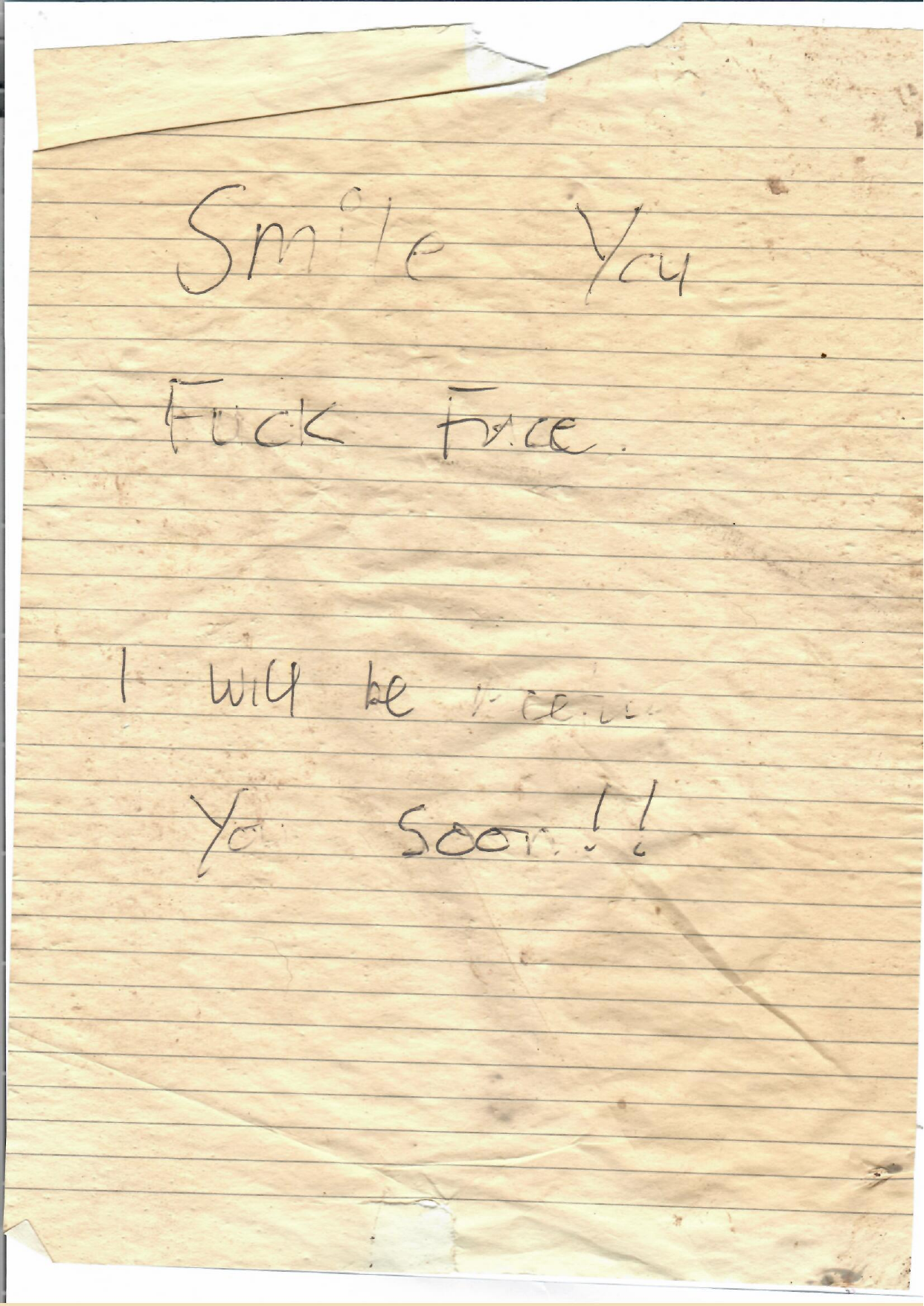
While I was there, I found a note stuck to one of them. It was directed at me. Handwritten on lined paper. The words, as written:
The note left on the bird scarer. Photographed as found. Produced in open court at Norwich Crown Court.
That note was produced in open court at Norwich Crown Court and reported by the BBC and picked up internationally, including by Yahoo News. I will leave it at that. You can read the original scan yourself above.
What I found was significant, and it is documented in photographs I took at the time.
The devices were not positioned in or adjacent to a standing crop. There was no crop. No standing cereal. Nothing an agricultural bird scarer is designed to protect. The Times later described the devices as having been “placed near his shepherd’s huts to ruin his business.” They were sited in long grass and wildflowers, pointing directly at my site, approximately 60 metres away. I photographed and filmed them. The vegetation around the devices, and the direction they were aimed, tells its own story. I have the images and the footage, dated 24 July 2024, thirteen days before the incident.
A game-bird seed feeder. Blue barrel, red lid, grain inside. Standing metres from where the gas guns were firing. I filmed it. On the soundtrack you can hear the boom. The video is the proof.
There was something else. Bird feeders. Seed dispensers. The sort used to draw game birds in, not drive them away. They were positioned metres from the scarers. I opened the lid on camera. Grain. Full. The film above is the proof.
A bird scarer is supposed to keep birds off a crop. A seed feeder is supposed to bring birds in. Putting both in the same place is not crop protection. It is a contradiction you can film. So I ask the only honest question left: were these bird scarers, or tourist scarers? Devices aimed at canvas sixty metres away, while seed was laid out to keep birds in the area the guns were blasting.
Within fifteen minutes of the farm side making a phone call, three police vehicles arrived. I had waited three weeks for a callback. They waited fifteen minutes. North Norfolk News reported on what followed.
Both parties received a word of advice and were sent on their way. I told the officers clearly: if the devices started again, I would return.
They started again on Monday morning, at full output, directly toward the guest yurts. I went back. I disabled them again. This time I was arrested.
I left my business card on every post where I removed a device. This is what a thief does not do.
What a thief looks like
I want to be precise about what I actually did, because the word theft was used, and I think the word matters.
I drove to the site in mid-afternoon. Not at night. Not in secret. Broad daylight.
I disconnected the battery on each device before I touched anything else. Then I disconnected the gas supply and turned it off. I wanted to make sure that whatever I was leaving behind was safe. A thief does not stop to make the equipment safe.
I placed my business card on the ground at the exact location where I removed each device. One card per gun. My name. My number. My invitation to come and talk to me.
I walked back to my car.
I drove the equipment to my grain store on the other side of the county. The grain store was unlocked. The devices sat there, in plain sight, until the police came to collect them. They were never hidden. Never sold. Never disposed of.
This was August. The three weeks in August are the three weeks that generate more revenue than the rest of the year put together. I had everything to lose commercially. I went anyway, because I had run out of legal options and my guests were lying in canvas tents listening to the equivalent of a gunshot going off every twenty minutes.
Have you ever heard of a thief leaving his business card?
The Crown Prosecution Service originally agreed. Their first decision was no realistic prospect of conviction. That decision was later reversed following a formal review requested by the complainant, as the Daily Mail reported in January 2025. The charge was also changed, from theft to criminal damage, which tells its own story about what the evidence actually showed.
What the police did not check before they arrested me
I am not writing this to attack individual officers. The officers who dealt with me on the day were professional. This is about process. Before anyone is taken away from their business in peak season, and before a tourism operator is put on a blue mattress for protecting guests under canvas, I would have expected five basic checks against the industry’s own guidance and against the physical facts on the ground.
From where I stood, those checks were not done before the arrest. If they were done, nobody shared the results with me.
The bird scarer codes of practice. The NFU and related guidance set out how auditory scarers are supposed to be used: distance from neighbours, hours of the day, rate of fire, direction, contact details, and the need to frighten birds rather than countryside visitors. I never saw anyone open that guidance, stand it next to the devices, and ask whether the setup matched it.
The direction the bird scarer was pointing. Mine were aimed toward the campsite, not away from people under canvas. Direction is not a detail. It is the difference between crop protection and a gas gun aimed at guests. If a villain points a gun at you, or points it away from you, does it matter? Of course it does. My guests were on the wrong end of that barrel.
Whether anything was actually being protected. On the days I photographed and filmed, there was no standing crop next to those guns. Long grass. Wildflowers. Game-bird seed feeders metres from the devices. If a scarer is not protecting a crop, the agricultural justification collapses.
The distance to the nearest structure where people sleep. My guests were about 60 to 80 metres away, under thin canvas. Guidance talks in hundreds of metres for a reason. Nobody measured that gap with me before the handcuffs.
How many months it had run, and the start and end times of day. This was not a one-off bang at midday. It was a seasonal pattern, months of it, from early March through till the end of August, from the small hours through into the evening in peak season. Duration and daily hours are the heart of any noise case. They were not walked through with me as part of a pre-arrest investigation of the devices themselves.
What happened instead was simpler. I had already gone to the police. I had already gone to the council. The council’s written line stopped at residential premises. The police treated it as a council matter. Guests stayed in the middle. When I did my job and made the devices safe, mid-afternoon, with business cards left where each gun had stood, the full weight of the criminal process arrived fast.
I am left with a plain question. If the industry code, the aim of the barrel, the absence of crop, the metres to canvas, and the months of early-morning fire are not checked before an arrest, what exactly was the investigation of the noise problem?
Two laws broken that day
I want this plain, because the press coverage and the dock only held one half of it.
On that day there were two wrongs in play, not one.
First. I broke the law by disarming equipment that belonged to a third party. I took someone else’s kit out of use without their consent. I have acknowledged that guilt. I was charged, prosecuted, found guilty, and sentenced. That is on the record. I do not run from it.
Second. A third party used that equipment for a purpose and in a way it was not designed or meant to do. Bird scarers exist to protect crops, aimed and timed under industry codes. Mine were aimed at people under canvas, roughly 60 to 80 metres away, from the small hours through the evening, from early March through till the end of August, over long grass and seed feeders rather than a working crop. That is crop-protection kit used as a noise weapon against guests, not as the tool it was made for.
Only one of those two was treated as a crime worth arrest, a blue mattress, and a Crown Court outcome. The other was left with the council’s line that tourists are not residential voters here, so the noise was not their problem in practice, while the police treated it as a council matter and did not run those five basic checks before locking the person who stopped the boom.
What action was taken against the other side?
I have owned my breach. What happened to the third party whose use of that equipment forced my hand?
As far as the public record and my own experience go: nothing comparable.
The police treated the noise as a council job. When I disarmed, I was the one arrested. At an earlier visit both sides got a wrist-slap. Only one side later sat in the dock.
North Norfolk District Council, in writing, would not investigate statutory nuisance unless it affected someone in lawful residential premises. Tourists on my site were treated as outside that. No abatement path opened for my guests.
The case that went all the way was my interference with the equipment. There was no parallel prosecution of the third party for how the scarers were sited, aimed, or timed.
Industry codes exist. They are not a criminal charge sheet. Nobody forced the other side through a court process for breaching best practice.
So the honest line is this. I have acknowledged my guilt. The third party whose use of that equipment pushed me into breaking the law was not put through the same process. The system answered one breach and left the other largely untouched.
What the silence teaches
That leaves a third failure: the established parties who looked the other way.
When police, council, or any body that is meant to uphold the rules sees an imbalance and does nothing, that silence does more than leave one campsite unprotected. It teaches the next person watching. This is how you can behave and get away with it. It nurtures the example. It turns one bad pattern into a template.
I have owned my guilt. Nothing equivalent happened to the side that forced my hand. And any institution that failed to see that imbalance is, by silence, nurturing others to behave the same way.
I am not demanding revenge. It is a request that the powers that be look hard at their own departments’ actions, before that example spreads. Question the process that checked none of the five basics before an arrest. Question the written line that left tourists outside protection. Question why only one of two wrongs ended in handcuffs.
Self-examination. Not payback. That is all I am asking.
The blue mattress
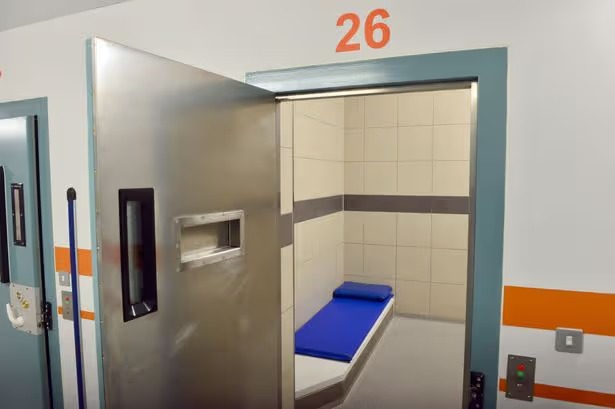
A custody suite. Blue mattress. Spotless seat. No toilet cover. Windows that do not open. I spent a night here after the second arrest. One officer called me a chump.
I spent a night in a custody suite after the second arrest. The mattress is blue. It is surprisingly comfortable for what it is. The officers were professional throughout, which I appreciated, given that at least one of them called me a chump. I object to that word. It implies foolishness. I would argue the facts do not entirely support that characterisation.
I am in the hospitality business. Cleanliness and an uncreased bed matter a great deal to me. This cell took both to heights beyond fanatical. Safety was so good the windows were either stuck or sealed shut. The toilet was spotless. The toilet seat was spotless. The toilet cover was spotless too, mainly because there wasn’t one. A rug, a couple of pictures on the wall, and a warm bulb would have helped the guest experience no end. I tried to find a review site so I could leave an honest score. It does not appear to be listed.
I was charged. I appeared at Norwich Crown Court. I admitted criminal damage, because I had committed criminal damage. I damaged the devices. I knew I was doing it. The defence was not that I hadn’t done it. The defence was that I was a man who had exhausted every legal option available to him and found none of them functional.
One thing the Recorder said at sentencing is worth noting clearly. The restraining order, the four-year order preventing contact with the complainants, does not prevent me from pursuing legitimate complaints against them through the council or the police. That was stated at Crown Court, on the record, by the judge who sentenced me. I have a restraining order. I also have the right to keep making legitimate complaints. Both things are true.
The guests I went back for. Two people, a lake, a quiet evening. That is all any of us wanted.
Would I do it again?
So yes. Today, in the same circumstances, I would do it again.
I was found guilty of disarming a gas gun that was being aimed and fired at my guests from 4am until 10pm.
I had approached the police. They decided it was a matter for North Norfolk District Council and, on that basis, allowed the situation to continue.
I had approached North Norfolk District Council. Their position was clear: my guests are tourists. They are not residential voters in this borough. And therefore, in the council’s view, they did not deserve the same protection.
Given that, the only avenue left open to me was to do my job. My job is to protect my guests at my venue. So yes. Today, in the same circumstances, I would do it again.
The rules that already existed
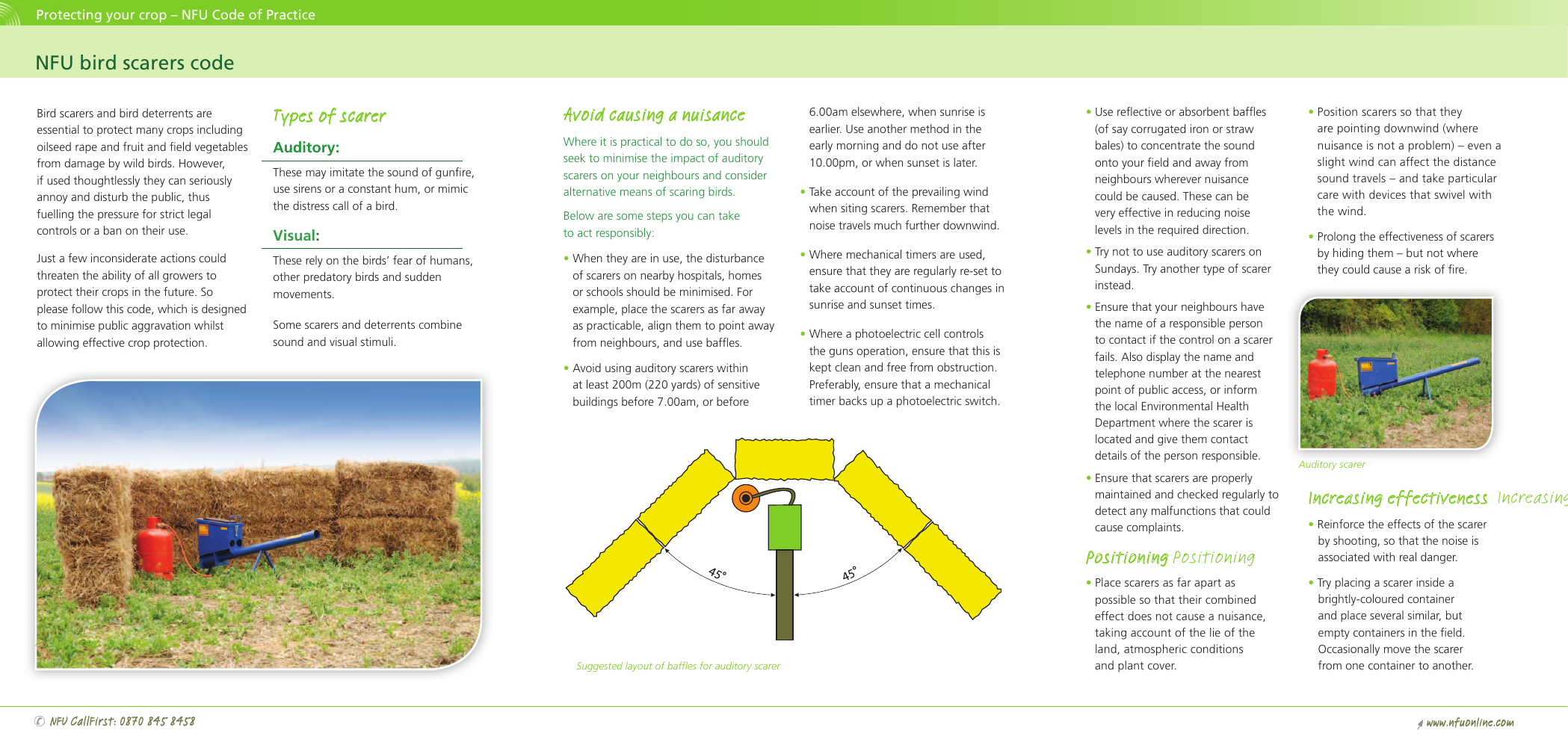
While all of this was happening, I was reading. And what I found was that the NFU already had a Code of Practice for bird scarers, published in 2022. Local authorities set out the same gap in plainer English. Somerset Council’s page on audible bird scarers and the law states there is no specific national legislation on bird scarers, only the Environmental Protection Act 1990 duty on councils to act against a statutory noise nuisance.
The code is worth reading in full. Below is the NFU leaflet itself, page by page, so you can read it on this site without leaving. After the pages, a direct comparison between what the code requires and what I experienced.
Page 1 of 2. Tap or click the image to open full size.Page 2 of 2. Tap or click the image to open full size. Both pages are hosted on this site so the code is readable here.
NFU Code of Practice requires
What happened at Dam Hill, summer 2024
“Place scarers at least 200 metres from sensitive buildings. Point them away from neighbours.”
Approximately 60 metres. Pointed directly at my site.
“Avoid use within 200m of sensitive buildings before 7am (before 6am in summer when sunrise is earlier).”
Firing from approximately 4 to 5am. Every morning. Through the peak of summer.
“Do not use after 10pm.“
Running until 10pm and later. Up to eighteen hours a day of discharges.
“Do not fire more than four times per hour.”
Approximately every 20 minutes. Three discharges per hour, sustained across multiple devices.
“Try not to use auditory scarers on Sundays.”
Seven days a week. No exceptions across the entire peak season.
“Ensure neighbours have the name of a responsible person to contact if a scarer malfunctions.”
No contact details were provided. The police offered a callback. In three weeks.
“Scarers are intended to frighten birds, not visitors to the countryside.” (NFU Code, direct quote.)
The devices were aimed at a campsite full of paying guests. My visitors used the word explosions in their reviews.
The entire code is predicated on protecting a standing crop from bird damage.
Photographs taken 13 days before the incident show no standing crop. Long grass. Wildflowers. A gas gun aimed at canvas tents sixty metres away.
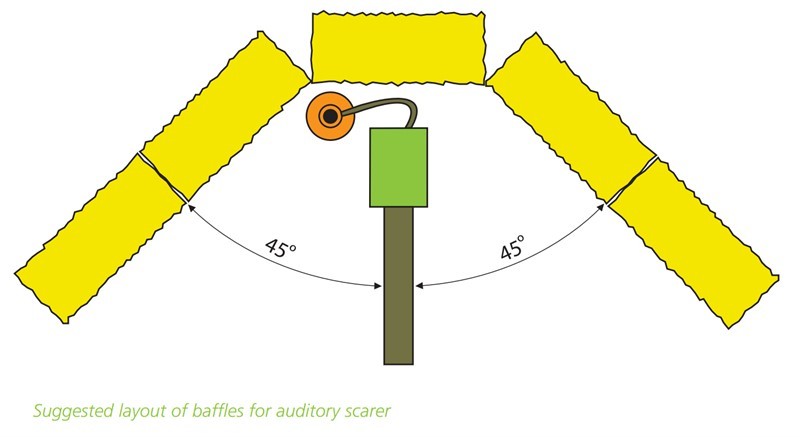
The NFU’s own suggested baffle layout: straw bales at 45° either side, directing sound toward the crop and away from neighbouring premises. The device on the boundary of my site had no baffles. It was aimed directly at the yurts, approximately 60 metres away.
The NFU code is voluntary. There is no enforcement mechanism. A farmer can read it, ignore every requirement it contains, and continue. The Environmental Protection Act 1990 exists to fill that gap. But North Norfolk District Council told me in writing that my guests, as tourists and not residential voters in the borough, did not qualify for that protection.
So: the voluntary code was ignored. The statutory protection was withheld. And I was prosecuted for doing the only thing left available to me.
What the council said, in writing
North Norfolk District Council. Their Environmental Protection Team set out their position in writing. I am quoting the institution, not individuals.
I am going to share what North Norfolk District Council’s Environmental Protection Team wrote to me, because I think it matters. I am not quoting individuals. I am quoting the institution’s position, in their own words, on record.
After I made a formal complaint, their written response confirmed that statutory nuisance under the Environmental Protection Act 1990 requires a residential receptor. Because my guests are tourists, not permanent residents of the borough, the council had no statutory duty to investigate. Their position was set out plainly:
“The Environmental Protection Team will not investigate allegations of statutory nuisance unless the alleged nuisance affects a person living within lawful residential premises.”
They also pointed me toward section 82 of the EPA, a private right of action, which means taking the matter to a magistrates’ court myself, at my own cost, as an individual.
I want to be precise about what happened here, because it matters. North Norfolk District Council were not applying the law as the law is written. They were applying their own internal policy, a policy that goes further than anything the legislation requires.
The Environmental Protection Act 1990 does not say that statutory nuisance protection is reserved for people in residential premises. Section 80 says that when a council is satisfied a statutory nuisance exists, it shall act. That duty is not qualified by the housing tenure of the people being affected. Section 82 gives any person aggrieved the right to pursue the matter privately. That word is not restricted to residential occupiers. The noise either was or was not a statutory nuisance. If it was, the law contains the remedy. The council’s residential filter does not appear in the statute.
What NNDC adopted was a policy decision. Their officers, or their elected members, decided that tourists spending money in North Norfolk’s most important industry do not qualify for the same protection the Act provides to people who live in a house nearby. That is a choice. It is not a reflection of what Parliament wrote.
North Norfolk’s tourism industry is worth hundreds of millions of pounds a year to the local economy. The county’s entire identity is built on people coming to experience its peace, its wildlife, its open skies, its silence. And the council’s position was that those people, the visitors, the guests, the couples and families sleeping in canvas in the English countryside, are not, in their words, persons living within lawful residential premises. So they would not act.
The police said it was a matter for the council. The council said it was not their job. Between two public bodies, a gap was created that the legislation does not actually contain. My guests were in the middle of it.
I chose a different approach.
Guests walking with their dogs by the lake at Dam Hill. Swans on the water. Bell tents on the bank. 800 metres from a nationally designated SSSI. The birds came back when the noise stopped.
What about the wildlife?
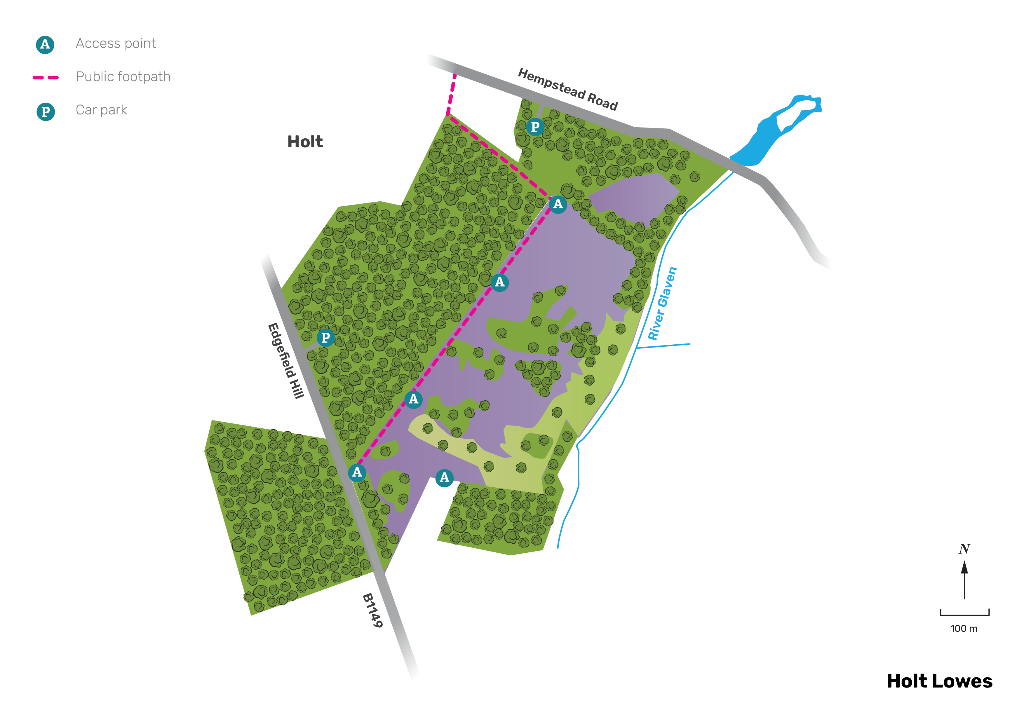
Holt Lowes SSSI. Nationally important heathland and wetland on the River Glaven, about 800 metres from the North Norfolk camping and glamping site. Designated by Natural England.
There is one aspect of this story I have not yet written about fully, and I think it deserves its own article.
The site at Dam Hill sits on the outskirts of Holt Country Park, a County Wildlife Site. Approximately 800 metres away is Holt Lowes, a nationally designated Site of Special Scientific Interest, described in official planning documents as nationally important heathland and wetland.
I noticed that the birds had gone quiet. Swans that had been on the water. The wildlife you normally hear and see around a site like this. The constant detonations, every 20 minutes from before dawn, were not only disturbing my guests. They were displacing the wildlife from the surrounding habitat.
In May 2023, Raptor Persecution UK documented the use of gas guns positioned not to protect crops, but in locations that deterred protected birds from settling and breeding. Natural England investigated and in at least one case forced removal of a device on that basis.
I am not making allegations. I am noting what I observed, and what the photographs show. A device producing 130 decibels every 20 minutes, positioned in wild grass with no standing crop, 60 metres from canvas tents and 800 metres from a nationally designated wildlife site, was clearing the air of everything that should have been in it.
I will write that story separately. It is a bigger subject than one section can hold.
What I would tell another campsite owner
Document everything, from day one. Every decibel reading, every review, every email, every phone call. Get it in writing. Record dates and times.
And then, when you have exhausted the formal routes: write about it. The only thing that changes how councils apply the EPA is political will and clearer national guidance. That comes from people who work in tourism telling the same story loudly enough that someone in Westminster, or in a district hall, decides it is cheaper to protect guests under canvas than to keep pointing them at a gap the statute does not require.
This is what the Environmental Protection Act 1990 does not protect.
The Act defines a statutory nuisance. It says councils shall act when one exists. It gives any person aggrieved the right to bring proceedings. It does not, on a plain reading, carve tourists out of protection. GOV.UK guidance talks about interference with a home or other premises. A glamping site with paying guests is other premises.
The gap I walked into was not a missing clause in Parliament’s statute book. It was how North Norfolk District Council chose to apply the Act. Their own bird scarers guidance tells operators to avoid statutory nuisance and follow the NFU code of practice. Their Environmental Protection Team set a policy: they will not investigate unless the alleged nuisance affects a person living within lawful residential premises. That filter is their decision. It is not what the legislation requires.
When the police treated the matter as a council job, and the council declined to investigate because my guests were tourists rather than residential voters, two public bodies created a hole the Act does not actually contain. My guests slept in the middle of it.
That is the gap. Not a permanent residence clause written by Parliament. A local interpretation that leaves commercial hospitality, campsites, glamping sites, and every guest under canvas without the investigation the statute contemplates.
UKHospitality and the VisitBritain board advocate for the tourism sector at policy level. The Campaign to Protect Rural England advocates for the rural environment. None of them, as far as I can find, have pressed councils to stop reading residential occupancy into a duty that the Act does not limit that way, or pressed for clearer national guidance so a tourist under canvas is not treated as outside the system.
They should. And if any of them read this and want to talk about what that looks like in practice, my email is open.
So I am left wondering why I spent a night on the blue mattress rather than the decision-makers at North Norfolk District Council. And if the police job is to uphold the law, why did nobody question why the council was not following government legislation as it is written?
The £525 Million Tourism Sector Left Unprotected
North Norfolk’s economy is fundamentally built on tourism. Official North Norfolk District Council economic reports confirm that visitors generate £525 million in annual revenue and support 29% of all local jobs (over 11,000 positions). This visitor economy relies on two distinct groups:
Overnight & Touring Visitors (£315m+ annual spend): Generating over 60% of total tourism revenue, staying guests spend heavily in local pubs, shops, and restaurants. Sleeping under canvas or in touring vans 60 metres from 130-decibel blasts at 4am causes immediate cancellation, refund requests, and severe business harm.
Day Visitors (£210m annual spend): Representing 82% of total trips, day visitors face daytime 130-decibel blasts along public footpaths, coastal reserves, and outdoor venues.
Despite relying on this sector as its primary economic engine, official correspondence from North Norfolk District Council confirms an extraordinary stance: the Council refuses to enforce statutory noise nuisance under the Environmental Protection Act 1990 for anyone who is not sleeping under a registered Norfolk residential council tax rates bill.
NNDC’s Environmental Protection Team confirmed in writing that unless a person is staying in a permanent residential home, the local authority has no statutory duty to protect them. In short: if you do not sleep in a property paying Norfolk residential council tax, the Council will not protect you from potential harm or severe antisocial noise, regardless of compliance with the NFU Bird Scarer Code of Practice.
The films, on the ground
Two additional clips from our YouTube channel sit alongside the primary proof video featured earlier in this account. No names of neighbours from me. The press named parties. These films show what it looked and sounded like from my side of the fence near Holt, North Norfolk, UK.
I asked first
Polite words. Frustrated underneath. Me on camera asking that the gas guns not be pointed at the venue. A conversation before the path closed.
North Norfolk Bird Scarer Conversation (YouTube Short, mYminiBreak). About two minutes. The ask before the court headlines.
Long before the sentencing headlines, I put a tongue-in-cheek film up on our channel. Same problem. Same gas guns. Lighter delivery. Countryside farce, not a press conference. Proof this was not a one-afternoon stunt.
Bird Scarers & Blame Games (YouTube, mYminiBreak). About three minutes. The lighter cut from the year before the sentencing press.
The story was covered by national, regional, and international press across two years. These are the pieces of record. I link them because they are independent reporting. They name parties I do not name here. This page is my account of my experience as a campsite owner dealing with bird scarers, noise nuisance, and the Environmental Protection Act.
Yahoo News US: campsite owner sentenced for sabotaging bird scarers (23 September 2026) – US syndication of the BBC Norwich Crown Court report; criminal damage admission, theft charge dropped, four-year restraining order that still allows legitimate council or police complaints.
AOL UK: campsite owner sentenced for sabotaging bird scarers (23 September 2026) – UK syndication of the BBC Norwich Crown Court report; criminal damage admission, theft charge dropped, restraining order that still allows legitimate complaints via council or police.
AOL.com: campsite owner sabotaged bird scarers that disturbed guests (24 September 2026) – US AOL syndication of the Telegraph Norwich Crown Court report; legitimate council complaint noted, criminal damage admission, 12-month conditional discharge and four-year restraining order that still allows legitimate complaints.
All of the press pieces name the parties involved. This article doesn’t. This is my account of my experience.
The site today. No explosions. A tent by still water. Birdsong. That is the quiet my guests booked for.
A note to my guests
From me to you. I am sorry about the noise. Nige.
If you stayed at the North Norfolk woodland site (near Holt, Norfolk UK) in 2024, 2025 or 2026 and the bird scarers ruined your night, or your whole break, I am sorry.
You paid for quiet. You got gas guns through thin canvas. I tried the council and the police first. When that path closed, I still could not give you the stay you booked. That is on me as the person who asked you to trust my field.
You deserved better. If you never came back, I understand.
Make-good discount code
I want to put something practical in your hand, not only words.
Read this full article (you already are). That is how you find the code.
Book your next stay with us, or pick a gift voucher for the break you want.
At checkout enter: QUIETAGAIN
QUIETAGAIN is 25% off selected stays and gift vouchers. One use per customer. Valid until 30 September 2027.
Start here: shop.myminibreak.com (or book the way you normally do and apply the code at checkout).
If the code does not take, email promotions@norfolkcoast-cottage.co.uk with your old booking dates and what went wrong. We will sort a fair make-good by hand.
I am not asking you to pretend the noise was fine. I am asking for a second chance at a proper night’s sleep in Norfolk, UK.
The site today is what it should always have been: crackling fires, birdsong, rustling trees, and quiet after dark.
See you in the field.
Nige
Stay at the North Norfolk Woodland Site
Yurts, shepherd’s huts and open pitches in the heart of the Glaven Valley, near Holt. Dog-friendly, off-grid, and genuinely quiet.
No. He drove to the site in mid-afternoon in plain sight. He disconnected the battery and turned off the gas on each device before removing it, ensuring what he left behind was safe. He placed his business card at the exact spot where he removed each gun. He transported the equipment to his grain store on the other side of the county, where it sat unlocked and in plain sight until police collected it. The Crown Prosecution Service originally decided there was no realistic prospect of conviction for theft. That decision was later reversed following a formal review, and the charge was changed from theft to criminal damage before the case reached Crown Court.
Can a campsite owner make a noise complaint under the Environmental Protection Act 1990?
Under the written law, yes. Section 79 of the Act defines noise nuisance affecting “a home or other premises”, and Section 82 allows “any person aggrieved” to complain. However, North Norfolk District Council applied an internal policy requirement that the affected persons must occupy lawful residential premises as their main residence. That distinction is the council’s policy choice, not a restriction written into Parliament’s statute.
Is there a code of practice for bird scarers in the UK?
Yes. The NFU publishes a Code of Practice for bird scarers which states that auditory devices should not be used before sunrise or after sunset, should not fire more than four times per hour, should be avoided within 200 metres of sensitive buildings before 7am, and, in the Code’s own words, are intended to frighten birds, not visitors to the countryside. The Code also states that the operator’s contact details should be made available to anyone affected. The Code is voluntary, not statutory, which means there is no legal mechanism to enforce it.
How loud are gas-powered bird scarers?
Gas-powered bird scarers can produce blasts of up to 130 decibels, equivalent to the sound of a gunshot at close range. Prolonged exposure above 85 decibels is considered harmful to hearing. Devices typically fire at intervals of 10 to 30 minutes and can operate from early morning until late evening during the agricultural season.
What can a campsite owner do if bird scarers are disturbing guests?
Document everything: dates, times, decibel readings, and guest reviews that reference the noise. File a complaint with the local authority’s environmental health team (even if they cannot act under the EPA, the paper trail matters). Contact the police. Consider contacting your local MP to raise the EPA permanent residence gap as a policy issue affecting the tourism sector.
What happened in the mYminiBreak bird scarer court case?
Nigel Marsh, owner of mYminiBreak, admitted criminal damage to gas-powered bird scarers near the North Norfolk woodland site at Edgefield after exhausting formal complaint routes. He appeared at Norwich Crown Court in September 2026 and received a 12-month conditional discharge. The Eastern Daily Press and Evening News 24 both reported on the case in detail.
Is the North Norfolk woodland site affected by bird scarers now?
No. The site is currently operating normally. Guests can expect the quiet woodland environment the site was designed to provide: birdsong, open fires, and undisturbed sleep.
What does Nigel say the police did not check before arresting him?
Five things, in his account: (1) the bird scarer codes of practice (NFU and related guidance on distance, hours, rate of fire, direction, contact details); (2) the direction the devices were pointing (toward the campsite, not away from people under canvas; if a villain points a gun at you or away from you, does it matter?); (3) whether any standing crop was actually being protected (his photos and film showed long grass, wildflowers, and seed feeders, not crop); (4) the distance to the nearest place people sleep (about 60 to 80 metres to thin canvas); (5) how many months the pattern had run, and the start and end times of day (early March through till the end of August; small hours through evening in peak season). He is clear this is about process, not individual officers. Full section: What the police did not check before they arrested me.