Kitesurfing is riding a board across the water powered by a kite in the sky. On the North Norfolk coast, UK the place to learn is Hunstanton Watersports on North Promenade (PE36 6GB), a BKSA school since 2006. They run kite courses, SUP lessons and hire, powerkiting, and gift vouchers. It is a powered extreme sport with real injury risk. Learn with the school. Do not go alone with a big kite. From mYminiBreak at Hunstanton Beach Farm or Heacham it is about a five-minute drive. Book the school direct. Sleep with us. Full risk detail sits lower on this page under How dangerous is kitesurfing, honestly?
Kitesurfing is a powered extreme sport. The canopy can pull harder than you can stand. Get the wind window wrong and you get dragged on hard sand or tumble in cold water. A 2020 season study put injury at about 10.5 per 1,000 hours on the water. Most hurts are scrapes and sprains. Some are not. On a bad day the sport has killed people, including on this stretch of Norfolk coast. The named local case and the full risk breakdown sit once, below, in How dangerous is kitesurfing, honestly? Learn with a BKSA school. Practise small on empty sand. Walk away when the day is wrong. If that sounds too serious, book a Coast Path day instead. Both are valid miniBreaks.
This guide covers what kitesurfing is on the North Norfolk coast, UK, what you book at Hunstanton Watersports, why sleeping five minutes away at mYminiBreak turns a lesson into a miniBreak, and one more thing people actually stick around for: the operator learning it himself at sixty-two, with eyes open about the power. Day one, the wetsuit, the yellow hat, the homework kite, a bit of weight to lose so the next kite can be smaller, and the slow climb toward a board. The school exists because the kite is not a toy. Follow the progress. It is more interesting than a brochure.
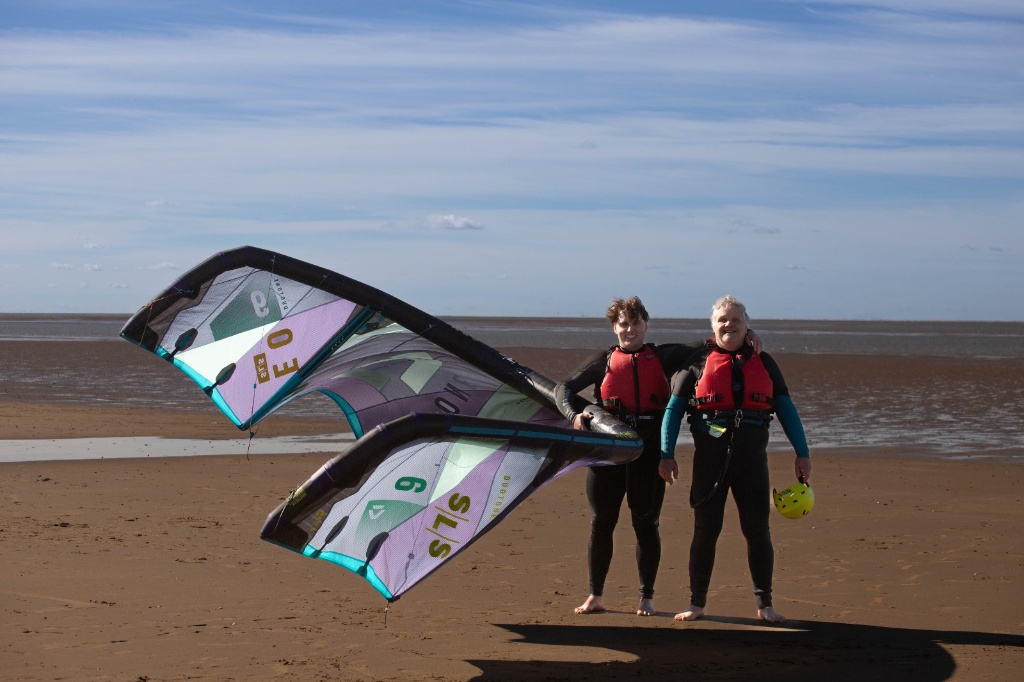
Day one done. Real kite, real Wash flats, instructor and Nige. Hunstanton, North Norfolk, UK. Oct 2026.
What is kitesurfing?
Kitesurfing (also called kiteboarding) uses a large controllable kite flying in the wind window above you, connected by lines to a harness, and a board under your feet on the water. The kite pulls you across the surface. You steer the kite with a bar. The board is how you ride, carve and, later, jump.
It is not the same as windsurfing. Windsurfing puts a sail on a mast fixed to the board. Kitesurfing puts the power in the air and keeps the board free. It is also not wakeboarding behind a boat. The wind is the engine.
Why people stick with it: once you have board starts and a bit of upwind skill, you can ride whenever the wind is honest. On a west-facing English beach like Hunstanton that can mean more usable days than a flat-calm lake summer.
Why beginners need a school: the kite has real power. Not toy power. Not Instagram power. Launch, land, self-rescue and body dragging are safety skills first because a wrong dive through the power zone can drag you across sand or water faster than you can think. That is why BKSA courses start on the beach with a trainer kite before you ever put a board under your feet in the sea. Skipping the school is how people join the injury numbers. For how serious those numbers get, including the worst case on this coast, see the danger section below.
How dangerous is kitesurfing, honestly?
Short answer: yes, it can hurt you badly, and on a bad day it can kill you. Safer gear and better teaching have improved things over the last twenty years. The power did not go away. It is still not bowls on the village green. If you only remember one line from this page, make it that.
A 2020 prospective study in the World Journal of Orthopedics followed nearly two hundred kitesurfers through a full season. They logged about 16,800 hours on the water and counted 177 injuries. That works out at roughly 10.5 injuries per 1,000 hours. Most were cuts, bruises, sprains. Foot and ankle took the biggest share, then knee, then hand and wrist. The same paper is clear that severe stuff still happens: ACL tears, a lumbar spine fracture, ankle fractures, even an eardrum rupture in that cohort. Other reviews put beginners, people with under a year in the sport, at a markedly higher injury rate than experienced riders. The kite does not care that you are new. It only cares about wind and where you parked it in the window.
What actually goes wrong, in plain English:
- Power zone mistakes. The kite dives or loops where it pulls hardest. You get yanked. On the beach that can mean a face-first drag along hard sand. In the water it can mean tumble, line wrap, or losing the board and the exit plan.
- Launch and land. The two most loaded moments. Crowded beach, offshore wind, bad helper, tired arms. This is where schools spend boring hours on purpose.
- Gusts and ego. Average wind looks friendly. Gusts ten knots above the mean do not. Oversize kite for your weight makes every mistake louder.
- Safety system you cannot find blind. Quick release only works if your hands know it without looking. Cold water, panic, and tangled lines are a bad classroom.
- Head, neck, spine. Less common than ankle sprains. Far more serious when they hit. High speed meets hard ground or another rider.
Local case. In March 2015 Sean Sands, 49, of Heacham, lost control of his kite off Hunstanton. The sailing club said he could not trigger the emergency quick release. He was pulled unconscious from the sea, airlifted to hospital in King’s Lynn, and died. The inquest heard he died of asphyxiation caused by drowning. BBC covered it. That is not ancient history on a foreign reef. That is The Wash, the club next to the school.
So when this page talks about danger, it is the product warning, not marketing theatre. Day one stays off the board because the instructor is managing risk. Homework is a small trainer on empty sand because a full-size kite in a gust is a different animal. Water work stays with a BKSA school. A sixty-two-year-old operator is trying to get lighter so the next kite can be a notch smaller because less pull is less chance of a bad day. Respect the power or stay on the Coast Path. Both are valid miniBreaks.
Injury numbers: van Bergen et al., Kitesurf injury trauma evaluation study, World Journal of Orthopedics, 2020 (PMC7206197). Local fatality: BBC News, Sean Sands inquest, March 2015 (BBC report). Always reconfirm school safety brief on the day.
Why Hunstanton works for the sport
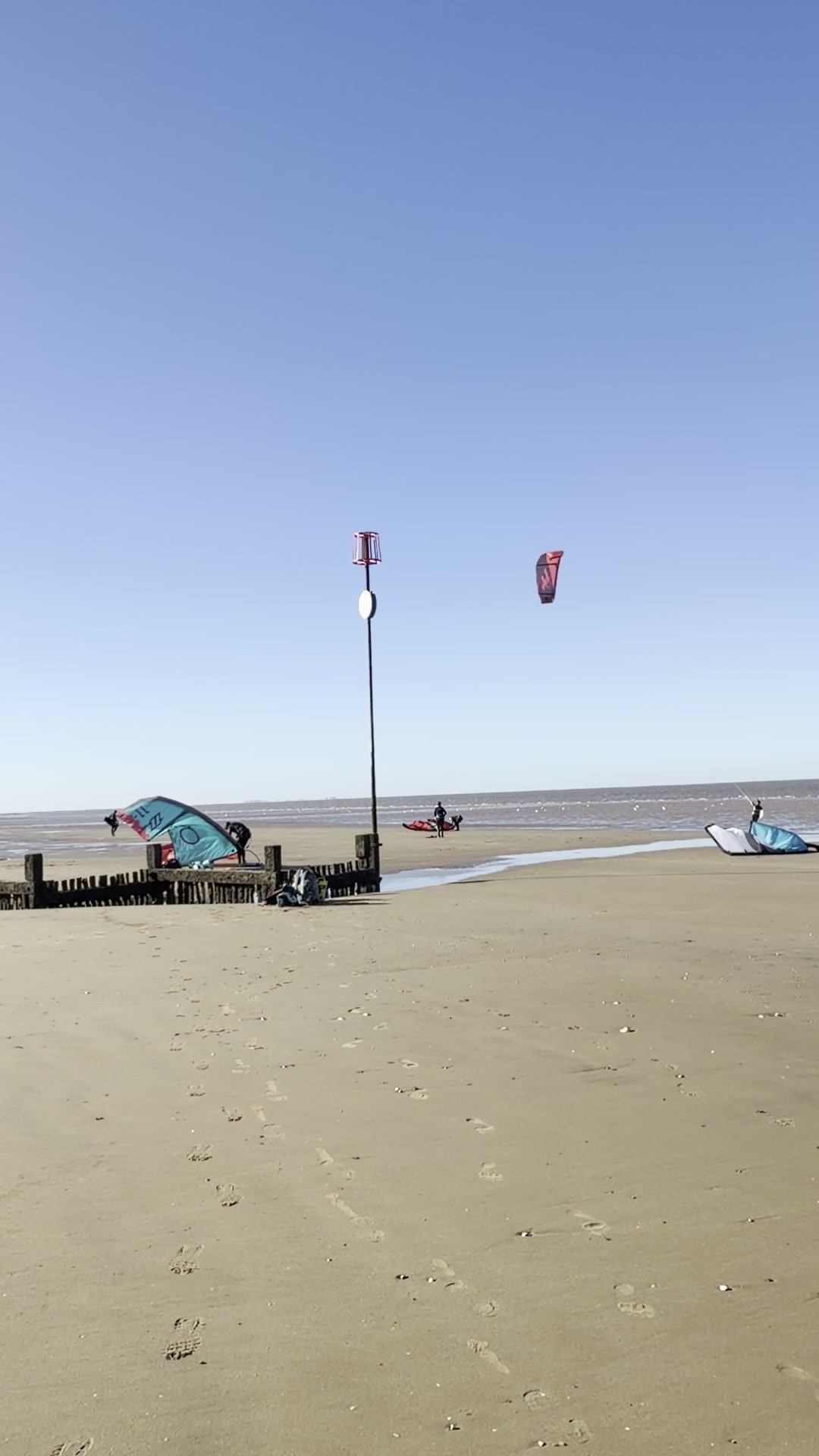
Hunstanton flats, North Norfolk, UK. Other riders already working. Real photo from day one, Oct 2026.
Hunstanton sits on a rare west-facing stretch of the North Norfolk coast, UK. Prevailing south-westerlies come in clean off The Wash. The beach is open, the water can be shallow near the shore for early water work, and the local kite community is established. Spring and autumn often give the steadiest learning winds. Summer works on the right day. Winter is more for experienced riders and school call-outs.
The school works with Hunstanton Sailing Club for showers and changing rooms, and with the local BKSA club so the beach stays managed for everyone. Large tidal range and wide open sand help beginners. Gradual shelving at certain tides means shallow water when you need it.
Honest caveat: schools cancel or move sessions when the wind is wrong or the sea state is unsafe. That is normal. Build a second plan into the day (Coast Path, Holme Dunes, a hut fire, or a SUP day if the school offers it) so the miniBreak still earns its keep.
Hunstanton Watersports: who they are
Hunstanton Watersports has been teaching on this beach since 2006. They are a British Kitesports Association (BKSA) accredited school with BCU-qualified paddle instructors, and one of the most active BKSA schools in the country. Longest standing approved kitesurf school on the Norfolk coast. Stated aim: high quality tuition and coaching, and to have fun while you learn. Founder Steve still teaches. The team also includes kite and paddle instructors such as Louise and Lee.
Base address: North Promenade, Hunstanton, PE36 6GB, next to Hunstanton Sailing Club.
- Tel: 07933 197963
- Email: info@hunstantonwatersports.com
- Book: Book online
- Vouchers: Gift vouchers
mYminiBreak is not the booking desk. We are the coastal base about five minutes away. Prices and slots always reconfirm with the school. Instructor to student ratios are limited, so spaces go.
Activities available at Hunstanton Watersports
Their public offer leads on three specialist lines. They have also taught windsurf historically. Always check the live site for what is open on your dates.
Kitesurfing lessons
BKSA beginner courses, private 1:1 and 2:1 coaching, improver sessions. Kit included on group courses. Full detail below.
Stand-up paddleboard (SUP)
Paddleboard lessons and coaching when the wind is calm or you want a different day. Hire available for day or multi-day use. Guests report creek paddles (e.g. Brancaster) as well as beach work.
Powerkiting
Land-based kite flying and powerkite tuition. Useful when you want kite skills without full water time, or as a windy-day land option.
Hire, kit shop & vouchers
SUP hire (day and multi-day). Retail stock and repairs for kite brands. Gift vouchers for courses and private hours. Ideal paired with a mYminiBreak stay voucher.
Kitesurfing courses in plain English
| Offer | What you get | From (confirm live) |
|---|---|---|
| BKSA Level 1 (1 day) | ~4.5 hrs, no experience needed, kit included, group ~1:4, age 16+. Beach trainer kite, setup, launch/land, water flying, body drag, self-rescue. | £180 |
| BKSA Level 1 & 2 (2 days) | Best-seller. Day 1 as Level 1. Day 2 board starts, first rides, longer power delivery. Aim is independent riding confidence. | £340 |
| Private 1:1 (2 hrs min) | Faster path for beginners, refreshers or kit setup help. | £140 (£70/hr) |
| Private 1:1 6hr package | 2×3 hrs block booking. | £390 |
| Private 1:1 9hr package | 3×3 hrs block booking. | £540 |
| Private 2:1 (3 hrs min) | Shared private tuition. | £270 |
Source: school lessons page, checked October 2026. Private minimum age can be 12 with parent/guardian present. Group courses 16+. Everyone learns at different speeds; you may not cover every bullet in a single day. Instructors decide when you are ready for the next stage.
Typical first kite day (Level 1 shape)
- Background of kitesurfing and the BKSA pathway
- Wind, weather, tides and location on this beach
- Trainer kite on the sand, wind window
- Full kite setup, pre-flight checks, safe launch and land
- Water flying and controlled body dragging
- Emergency pack-down and self-rescue
Level 2 adds board rescue, board starts, first rides and surfing with others. That is the two-day path most complete beginners book.
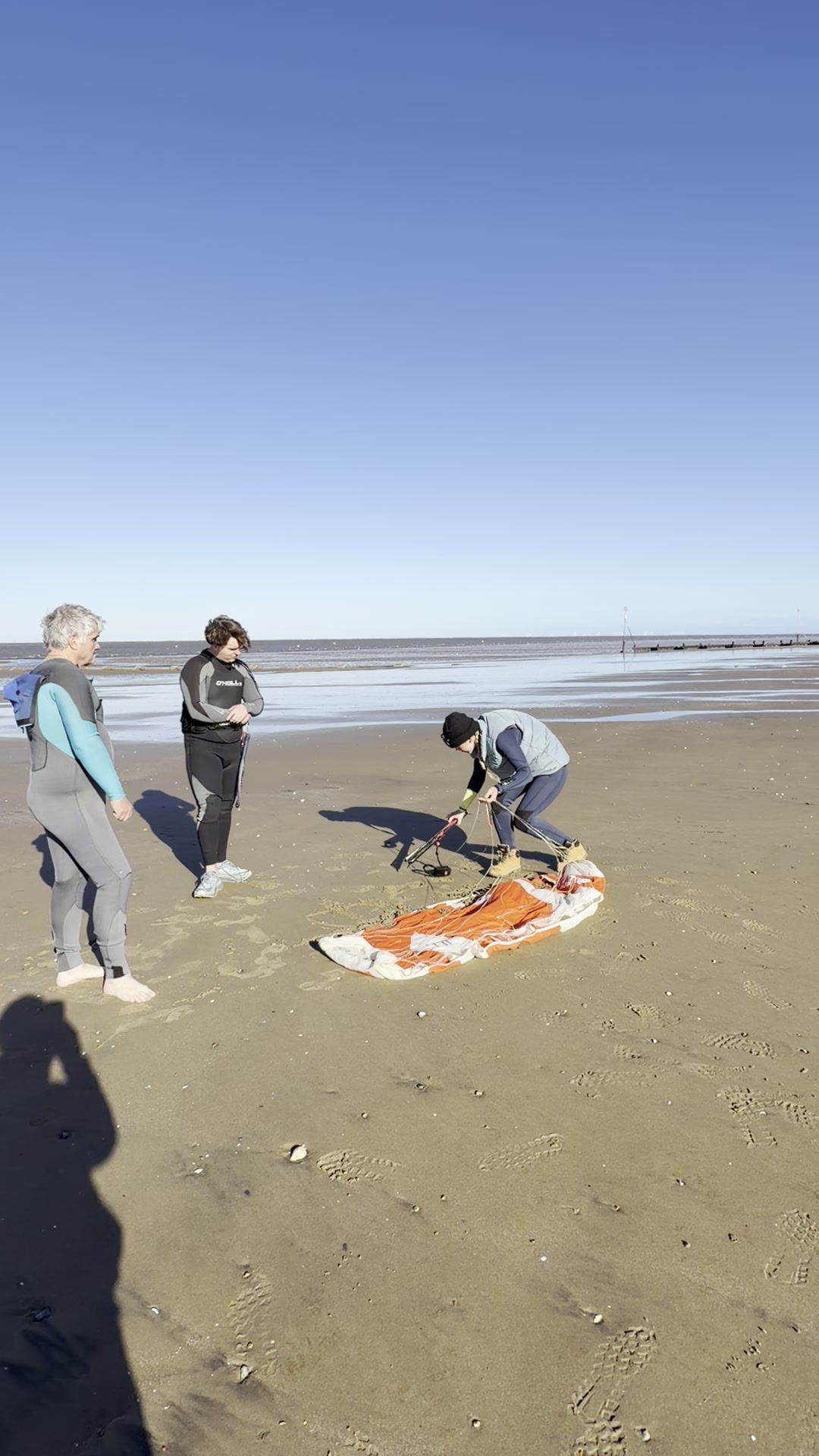
Trainer kite on the beach. Wind window first, board later. Hunstanton, North Norfolk, UK.
SUP when the kite day is cancelled
Flat calm is bad kite weather and good paddle weather. Hunstanton Watersports run SUP lessons and hire. Guests use boards on the beach and on local creeks. If Friday is howling and Saturday is glass, you can still get wet in a good way. Confirm hire rates and lesson slots direct.
Powerkiting
Powerkites are flown on land. You learn kite control, the wind window and power delivery without a full board start in the sea. Useful for children (within school rules), nervous beginners, or a short session when water time is not the plan.
Book the school direct
They put you on the water. We put you to bed five minutes up the road. Confirm wind and date with them before you lock the stay.
Nige learns to kite (follow the progress)
Most guides stop at prices and wind roses. This one keeps a running diary from the person who owns the beds five minutes up the road. Same beach. Same school. Same yellow hat. If you like following one bloke get it wrong, get dragged, buy homework kit, and slowly get better, stay on this page. We will update it as sessions stack up.
Session 1 · October 2026 · I was fine until they handed me the wetsuit
Sixty-two years old. First proper kite day. We drove down to Hunstanton, North Norfolk, UK with that quiet confidence you get before you discover you don’t know how to put clothes on. Breathing in. Squeezing. Pulling. Tugging. Eventually I was in. Red life jacket. Yellow hat on top. The photos tell you which face is which: relaxed on arrival, scared little boy once the kit went on.
We watched the proper riders strutting about on The Wash, then they put a trainer kite in my hands. About five foot long. Sounded friendly. It wasn’t. Three and a half hours of back-to-the-wind, kite window, bigger kites, getting dragged here and there, head under, splash splash pull. Necks, wrists, arms, glutes, shins, chins. All of it had an opinion. That drag is the small version of kite power. The full risk picture is in the danger section above. Day one is where you feel why the school exists.
Then the instructor said we wouldn’t be going on the boards today. I still don’t know if that was our skill set (honest answer: next to zero) or normal Day One practice. I was quietly relieved. Emergency chords and kit jargon can wait for the next water day.
Lesson one: the beach school earns its keep. Lesson for guests: book Hunstanton Watersports direct, sleep five minutes up the road with us, and leave a backup plan for when the wind or the instructor says not today. That cancel call is safety, not bad service.
Your base for all of it. Nige
Homework · the 2 metre kite on the beach
After session one I bought a proper wetsuit and a small practice kite. About two metres. Foil trainer. Shore only for now. No board. No heroics. The job is the wind window: figure eights, parking the kite at the edge, feeling when it wants to yank, learning to depower before the sand becomes a runway.
I live and base around Heacham, North Norfolk, UK. That matters for wind. Heacham faces west into The Wash. Onshore and cross-shore for us tends to be west, northwest, north. South and southwest can push you the wrong way. East is rarely the friend you think it is. Wind alone is never enough here. The tidal range is huge. Low water leaves those shallow flats that forgive pride. High water on a rough day does not.
Apps I actually use: Windy.com (the map one most water people mean, not the lookalike app with a similar name), Windguru spot tables, and a tides app. Gusts that sit a long way above the average mean keep the kite small and the ego smaller. Strong air on a two-metre trainer is flyable, but it is spicy. Empty hard sand, safety leash on, launch low, clear of people, dogs and groynes. If you get the window wrong you can still get dragged. That is the point of practising on land first.
Honest body note: I am not a lightweight. On a proper water kite that usually means a bigger canopy for the same wind. Bigger kite, more pull, more things that can go wrong if you get the window wrong. So part of this story is not only homework on the sand. I am raising the exercise level and trying to lose a bit of weight. Not a makeover. A practical aim: a notch lighter means the school can put me on a slightly smaller kite when the day comes. Same wind, a little less power in the lines, a little less scary. Seat harness for learning, not waist first. Hips matter. Arms only last so long.
Still on the sand. Still learning. Nige
Sixty-two · is this sensible?
I am sixty-two. That sentence belongs in the story. Kitesurfing is not bowls. Research puts the injury rate around ten per thousand hours once you are riding, and beginners sit in a worse bracket. Most hurts are scrapes and sprains. Some are not. Get the window wrong and it can drag you along the sand hard enough to rewrite your face. The full worst-case picture, including what this stretch of coast has already seen, is written once under How dangerous is kitesurfing, honestly? I am not rewriting it here. I am not pretending I never read it either.
So is it sensible at sixty-two? Only if you treat the danger as real. Book a BKSA school for water work. Practise the small trainer on empty sand in honest wind. Learn the quick release until it is boring. Wear the seat harness when the day comes. Lose a bit of weight if it means a slightly smaller kite and less pull in the lines. Keep the fitness up between sessions. And if the instructor says not today, that is the sensible answer, not a failed one. Age does not make you bulletproof. Caution might keep you upright long enough to look ridiculous in a yellow hat again next week.
I still went. Scared little boy in the photos. That is allowed. What is not allowed is pretending the power is a joke.
Sixty-two and still learning. Nige
Side quest · fitter, lighter, smaller kite
Three and a half hours of splash and drag told me the truth. Fitness is part of the sport. So is body weight. I am not chasing a magazine cover. I am chasing a kite size that feels manageable when I finally go back in the water with a full-size LEI and a harness. Lose a bit of weight, move more between sessions, keep the 2 m trainer honest on the beach. When session two arrives I want the instructor sizing me for skill and wind, not for a heavier version of me who needs more canopy than is comfortable.
If you are in the same boat: the school still decides the kite on the day. Wind wins. But every kilo you are not dragging is one less reason for a bigger sail. That is the quiet maths behind the yellow hat and the homework kite.
Smaller kite if I earn it. Nige
What comes next · water, harness, plywood
The ladder from here is simple and slow on purpose. More trainer hours in sensible wind. Keep the exercise up between them. Then BKSA water time again with Hunstanton Watersports: body drag first, board starts when the instructor says so, riding both ways later. Shallow Wash flats at the right tide are kind to beginners. A mismanaged big kite is not a toy. That is why first water sessions stay with a school, quick release until it is muscle memory, and no solo self-launch of a full-size kite until someone has taught me properly. At sixty-two I would rather look cautious than look lucky.
I will keep writing it up here as it happens: next water day, first stand on the board if it comes, whether the smaller-kite plan is working, the day the wind lied. If you are planning your own first lesson, book the school, book the bed five minutes away, and know that day one is allowed to look ridiculous. Mine did. Yellow hat and all.
Session two when the diary and the wind agree. Nige
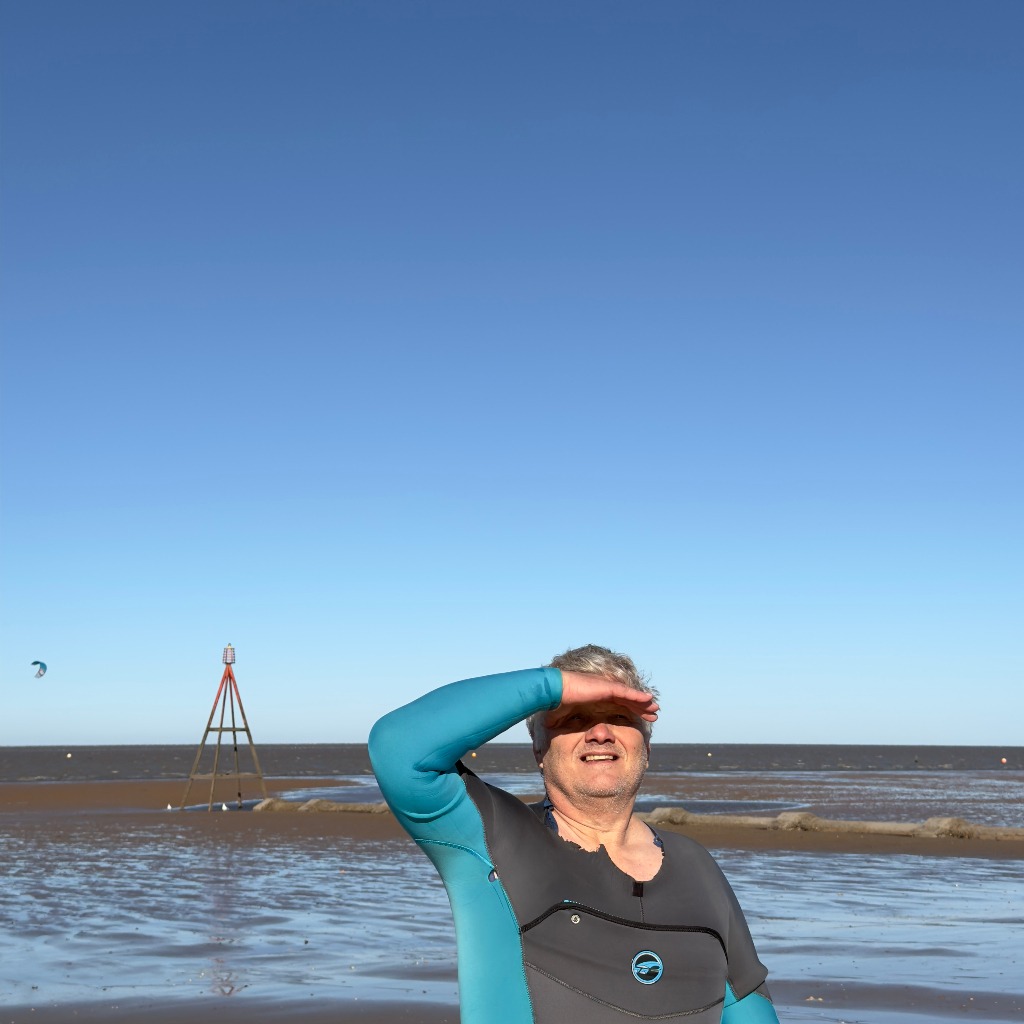
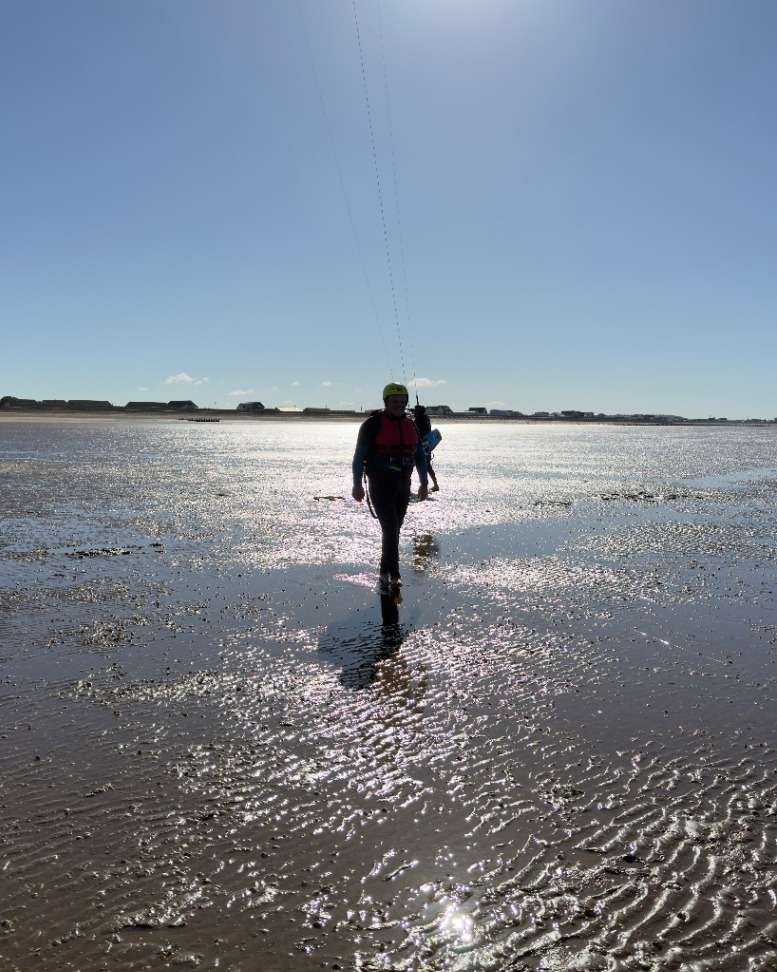
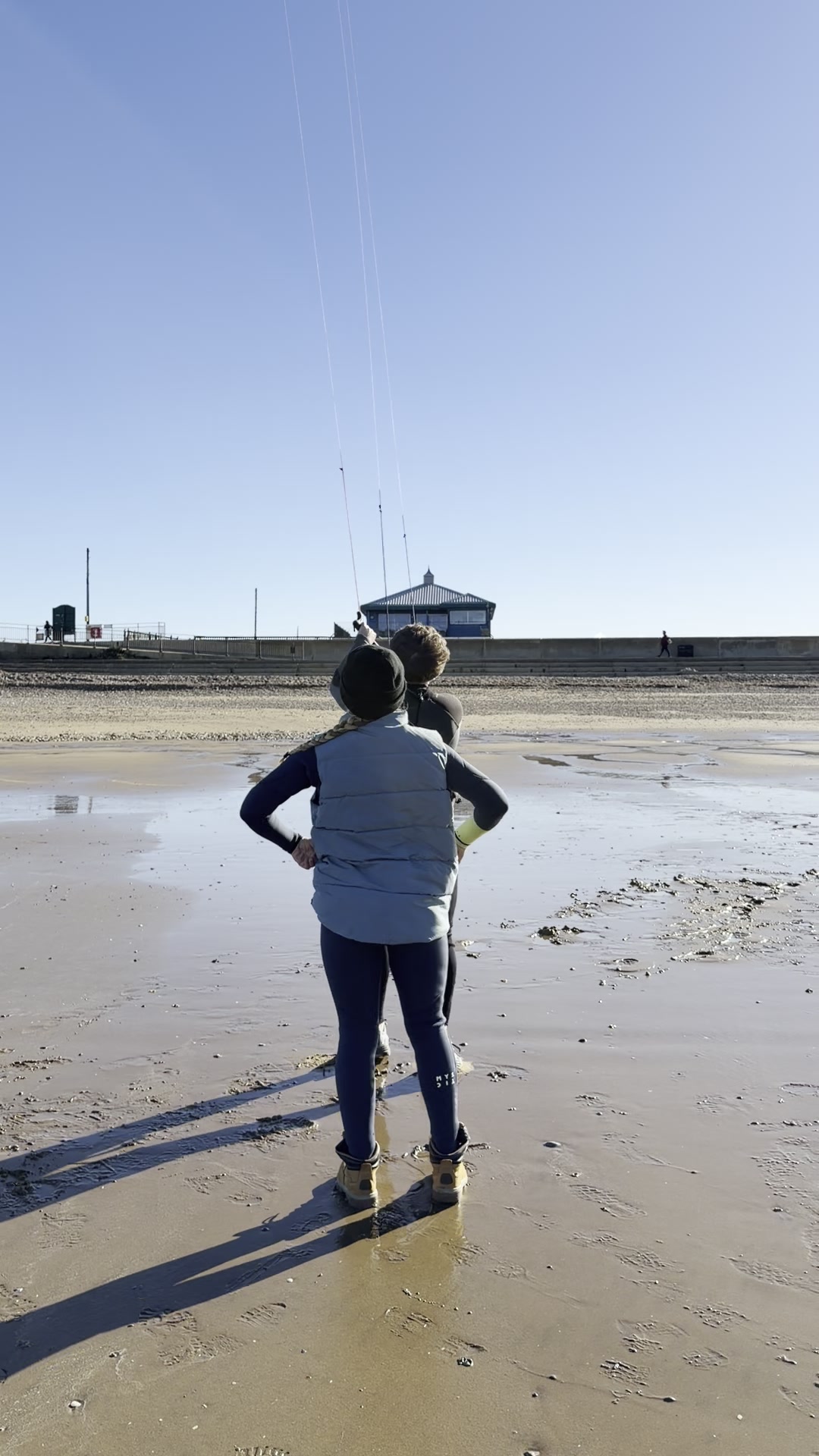
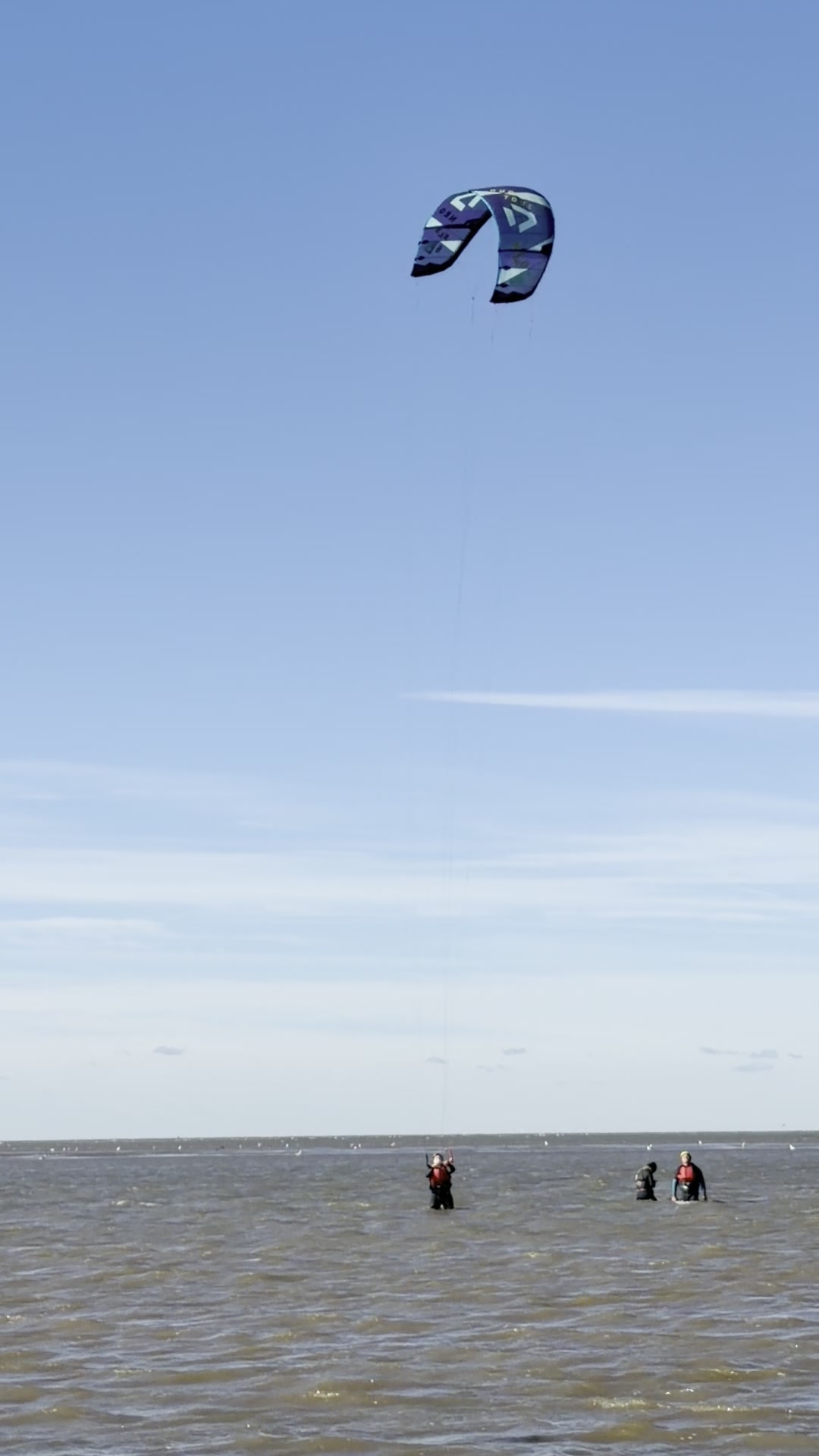
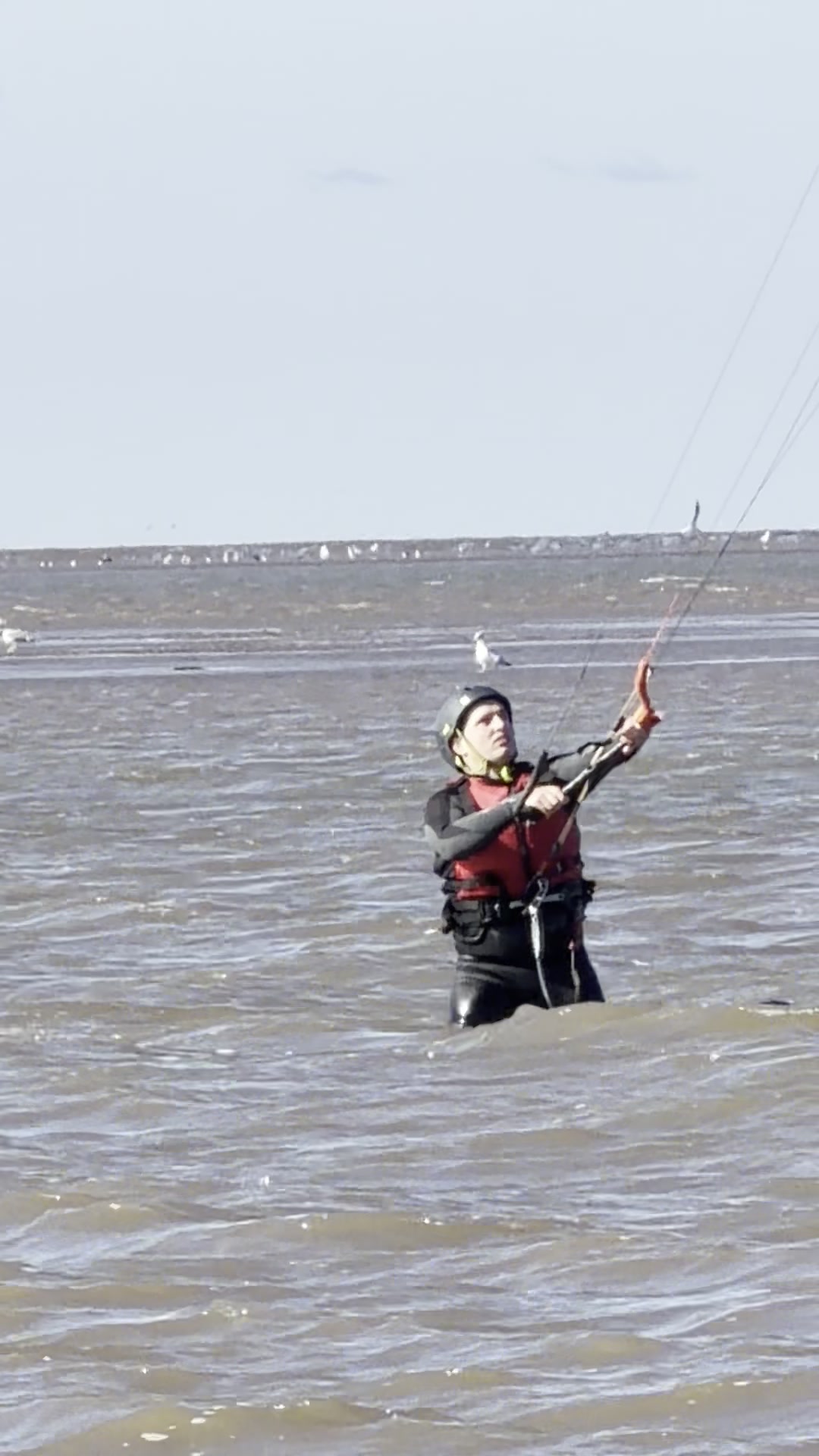
Gallery: real lesson media, Hunstanton, North Norfolk, UK, Oct 2026. All frames from Nige’s first kite day at Hunstanton Watersports.
Five minutes from mYminiBreak
mYminiBreak runs coastal bases at Hunstanton Beach Farm, Heacham and Holme-next-the-Sea. North Promenade PE36 6GB is a short drive from the Hunstanton and Heacham sites, not a half-hour trek with a wet wetsuit in the boot.
Why that matters for watersports guests:
- Early start for a tide or wind window without a hotel lobby at 6am
- Somewhere to dry kit, make a brew and sit by a fire after the session
- Dogs can stay on pitch or walk Old Hunstanton / Holme while you are under the kite (dogs are not part of the lesson)
- Second day can be SUP, Coast Path, RSPB Snettisham or Titchwell if tides suit
Autumn and winter product filter: shepherd huts, campervans, motorhomes and caravans. Tent pegs are a summer story.
Hunstanton / Heacham
Closest hop to the beach school. Huts, pitches, Old Barn and Dairy if you want a proper bed.
Holme-next-the-Sea
Peddars Way end, dunes, quieter night. Short A149 run to North Prom for the lesson.
Stay gift vouchers
Pair a school course voucher with a mYminiBreak stay voucher. Guest picks dates subject to diary.
Accommodation hub
Glamping, cottages, short breaks, camping product in one place.
How to build the miniBreak
- Check wind and sea state for your Norfolk dates (BBC Holme or Hunstanton is fine for a guest read).
- Book Hunstanton Watersports online for kite, SUP or private hours. Ratios are limited.
- Book mYminiBreak for the night before and after if you can. Five minutes beats fifty.
- Hold a calm plan: SUP hire, Holme Dunes, Peddars Way end, or RSPB hides around official tide tables.
What to wear and bring
- Swimsuit or baselayer (school supplies kit including wetsuit on kite courses; confirm)
- Towel, spare dry clothes, warm layer for the car park
- Sun cream even on grey days; windburn is real on The Wash
- Water and a simple snack
- Phone in a dry bag, or leave one person on the beach with the camera
Leave jewellery off. Glasses straps help in spray. If you have never worn a wetsuit: breathe in, pull hard, ask for help. Day one is not the moment for pride. If you buy a small trainer for homework after the lesson, start on empty sand in moderate wind, not in a 20-knot gust scrap with walkers nearby.
Pair it with other Norfolk days
- Knot season and RSPB Snettisham
- Norfolk boat trips and salt marsh sails
- Outdoor Norfolk hub
- Dog-friendly coast (Old Hunstanton and Holme when main beach bans apply)
- White Horse Holme after a cold session
- Activities hub
Stay over, make it a miniBreak
Lesson on North Prom. Sleep five minutes away. Kit drying by the door. That is the product.
Frequently Asked Questions
What is the difference between kitesurfing and windsurfing?
Kitesurfing uses a kite in the air and a free board on the water. Windsurfing uses a sail fixed to the board. Hunstanton Watersports leads publicly on kite, SUP and powerkite.
What activities does Hunstanton Watersports offer?
Kitesurfing courses and private coaching (BKSA), stand-up paddleboard lessons and hire, powerkiting, gift vouchers, and kit retail. Confirm live availability for your dates.
How far is Hunstanton Watersports from mYminiBreak?
About a five-minute drive from mYminiBreak Hunstanton Beach Farm and Heacham sites to North Promenade PE36 6GB. Holme-next-the-Sea is a short drive along the coast road.
How much is a beginner kitesurf course?
School site check October 2026: BKSA Level 1 one day from £180; two-day Level 1&2 from £340; kit included on those courses. Private 1:1 from £140 for two hours minimum. Reconfirm before you pay.
Will I get on a board on day one?
Often not. Level 1 is trainer kite, window, water flying and body drag. Boards sit in Level 2 or when the instructor says you are ready. Nige’s first session (Oct 2026) stayed off the board. That is normal, not a fail.
Is a windy Friday good for a first lesson?
Often yes for kite sports if the school says strength and direction are safe for beginners. Too much wind or a rough sea and they cancel. Trust that call. Use SUP or a walk as backup.
Can I bring my dog?
Dogs are welcome at mYminiBreak sites. They are not part of the watersports lesson. Plan a beach walker or a quiet pitch day while you are on the water.
Do I need my own kit?
No on group kite courses: equipment is provided. Private students can bring their own if the instructor is happy with safety systems. SUP hire is available separately. Nige bought a wetsuit and kite after lesson one for homework before session two. Optional, not required.
Where do I book?
Book Hunstanton Watersports at hunstantonwatersports.com/book-online. Book the stay at mYminiBreak or norfolkcoast-cottage.co.uk. We do not take the lesson payment.
Can I practice with a small kite on the beach after a lesson?
Yes, many people buy a small trainer for shore homework. Nige is on a roughly 2 m foil trainer at Heacham for window practice only. Pick empty hard sand, watch tide and wind, keep clear of people and dogs, use the safety system, and treat strong gusty days as advanced even on a small kite. Water and full-size kites still belong with a BKSA school until you are signed off.
Why does this page keep updating Nige’s sessions?
Because following one real beginner is more useful than a static brochure. Same operator, same coast, same school guests can book. When session two happens, it lands here with honest notes and real photos. Fitness and weight notes stay in the story too: lighter can mean a smaller water kite, which is a little less scary.
Is kitesurfing safe for complete beginners?
No. Not in the soft sense. A powered kite can injure you and, rarely, kill you. A 2020 season study put overall injury around 10.5 per 1,000 hours, mostly mild, with beginners higher risk. Launch, land, gusts and a missed quick release are where things go bad. The named local case and the full breakdown sit under How dangerous is kitesurfing, honestly? Done properly it is taught in steps: beach trainer, safety systems, body drag, then board. Done alone with a big kite and no training it is reckless. Book a BKSA school. Respect wind and tide.
Is kitesurfing sensible in your sixties?
Nige started at sixty-two with eyes open about injury rates and the real power of the kite. Sensible only with a school, homework on a small trainer, honest wind and tide, fitness work, a slightly smaller kite if you earn the weight loss, and the humility to walk away when the day is wrong. Age is not a ban. Pretending the kite has no power is. See the danger section for the full risk picture.
What are the main dangers of kitesurfing?
Power-zone pulls and beach drags, bad launches and landings, oversize kite in gusty air, tangled lines, missed quick release, collision, and less often head or spine trauma. Cold water and fatigue make every mistake worse. That is why Level 1 spends hours on control before a board appears. Detail and sources: How dangerous is kitesurfing, honestly?
Stay over, make it a miniBreak. Nige